Personal Trainer vs Fitness App: Which Suits Your Goals?
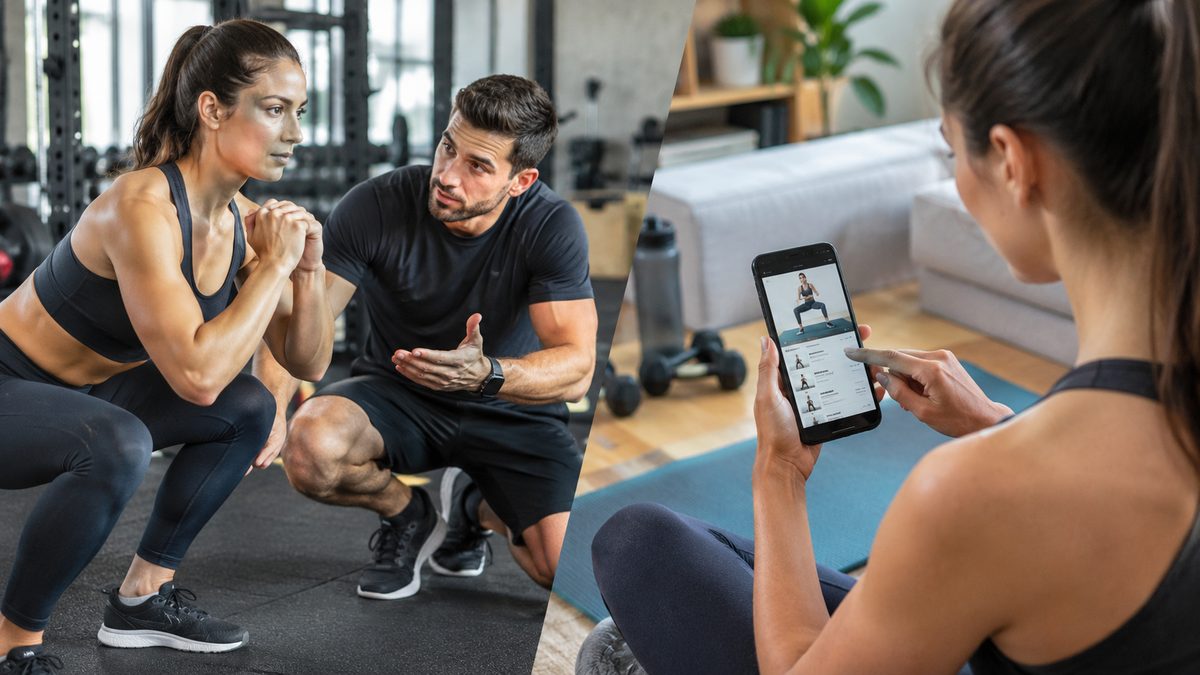
Choose a personal trainer when you need close guidance and Accountability; choose a fitness app when you can train safely and stay consistent on your own. Your goal matters, but your main barrier matters more. Two people may both want Weight loss. One needs a clear Exercise plan that fits a busy week. The other knows what to do but keeps missing sessions. The first person may do well with a Mobile app. The second will often get more value from a trainer.
The best option is the one you will use for long enough to make progress. A detailed plan has little value if it sits unopened. A skilled trainer also cannot help much if the session time or cost causes you to quit. Match the tool to the reason your progress has stalled.
What is really stopping you from reaching your goal?
Start with the point where your past efforts broke down. That tells you what kind of support you need.
If you struggle to choose exercises, set up equipment, or judge pain, a trainer can watch you move and respond at once. If you already know the basics but lack structure, an app can organise your week and record your work. If you start well and fade after ten days, you need a stronger system for Motivation and follow-through.
Think about your last failed attempt. Did you stop because the plan felt confusing? Did work disrupt your schedule? Did a sore knee make you unsure about continuing? Did you simply lose interest? Each cause points to a different answer.
- Choose a trainer when uncertainty or poor technique stops you.
- Choose an app when you need a plan that can travel with you.
- Consider both when you need coaching at first but want to become more independent.
- Change the goal itself if it demands more time than your week can support.
A useful choice solves the barrier you have, not the barrier fitness marketing tells you to have.
When does a personal trainer give you the clear edge?
A personal trainer has the edge when the quality of each decision matters. The trainer can change a movement after seeing your stance, range, speed, or signs of strain. An app can display instructions, but it cannot always tell whether your body is doing what the screen shows.
This matters most for beginners, people returning after a long break, and anyone who feels unsure around gym equipment. It also helps when a goal needs careful progress. Building strength, preparing for a physical event, or training around limits requires more than picking a harder workout each week.
Picture a new lifter doing a squat. The app says to keep the chest up and knees in line with the feet. The lifter believes both are happening. A trainer sees that the heels rise and the lower back rounds near the bottom. The trainer reduces the depth, changes the setup, and checks the next attempt. That correction can turn a poor movement into useful practice within minutes.
A trainer can also judge effort more accurately. Many beginners stop a set too early because the feeling is new. Others push through sharp pain because they think hard training must hurt. Live coaching helps separate normal effort from a warning sign.
The edge is personal observation. If your result depends on feedback you cannot give yourself, a trainer is the stronger choice.
When is a fitness app the smarter tool?
A fitness app works best when access and flexibility are your main needs. It puts the plan on your phone, lets you train at changing times, and often costs far less than regular coaching. That makes it useful for people with sound basic technique and enough confidence to train without live supervision.
A good Mobile app removes small choices. It tells you which session comes next, how many sets to perform, and when to increase the load. This reduces the effort of planning. You can open the session and begin.
Apps also make records easy to keep. Seeing that you walked farther, lifted more, or completed more sessions can make progress feel real. Wearable technology can add heart rate, step count, sleep data, or workout time. That data is useful when it answers a clear question. It becomes noise when you collect it without changing your actions.
For example, a person aiming to improve general Physical fitness may need two strength sessions and regular walking each week. An app can schedule the work, send reminders, and show a monthly record. Paying for live coaching at every session may add little if the person already moves well and follows the plan.
An app is the smarter tool when you need convenient structure more than human judgment.
Which option creates stronger accountability?
A trainer usually creates stronger external Accountability because another person expects you to arrive. You have booked a time, paid for it, and made a direct promise. That social pressure can help when skipping sessions has become easy.
An app provides lighter prompts. A reminder can bring the workout back to your attention, but dismissing it has no social cost. Streaks and badges may help for a while. They lose power when the reward stops feeling fresh.
External pressure is not always the best long-term answer. Some people become dependent on appointments and stop training when coaching ends. The better trainer uses scheduled sessions to build self-trust. The person learns how to plan a week, adjust a session, and restart after a missed day.
An app can support that independence if you already respond well to logs and reminders. It can help turn Exercise into a Habit by linking it to a set time or event. For example, you might begin a short workout as soon as you return from work. Repeating that link matters more than protecting a perfect streak.
Choose the form of accountability that has worked in other parts of your life. If deadlines and appointments move you, lean toward a trainer. If checklists and private records keep you steady, an app may be enough.
Which choice works better for weight loss?
For Weight loss, neither option wins through workouts alone. Results come from keeping an energy deficit while protecting your Health, strength, and daily function. Training supports that process, but food intake and daily movement have a large effect.
A trainer can help you set a realistic training load and notice when the plan is too hard to sustain. This matters because people often react to slow scale changes by adding punishing workouts. Fatigue then rises, movement outside the gym falls, and missed sessions follow.
An app can be effective when it makes activity easier to track and repeat. Walking targets, strength sessions, and simple progress logs can give the week a clear shape. Yet calorie estimates from apps and watches are rough estimates. Treat them as trends rather than permission to eat back every reported calorie.
Imagine two people using the same fat-loss app. One completes the plan and adjusts food portions with care. The other skips hard sessions, feels guilty, and tries to make up for them with extreme workouts. The program is identical, but the response is different. The second person needs help with pacing and behaviour, so a trainer may provide more value.
Pick the option that helps you repeat moderate actions. Weight loss rarely fails because someone lacked one brutal workout.
How much should budget shape the decision?
Your Budget should set the level of support, not push you toward a plan you cannot maintain. App subscriptions often cost less than one training session. Personal coaching costs more because you pay for time, observation, planning, and changes made for you.
Compare the cost with likely use. A cheap app that you ignore is wasted money. A trainer can also be poor value if you attend sessions but never follow the plan between them.
You do not have to choose the highest or lowest level of help. A mixed setup can control cost. You might book several sessions to learn technique, then use an app for independent workouts. A later check-in can review progress and correct problems. Another option is small-group coaching, which can offer live support at a lower cost per session.
Set a spending limit you can hold for at least several months. Short bursts of costly support can work for learning, but lasting goals need a plan that survives ordinary bills and busy weeks.
Can an app replace a trainer's feedback?
An app can replace planning in many cases. It cannot fully replace skilled observation. Video guides teach positions and cues, while automated tools can count repetitions or compare motion. They still work from limited information and may miss pain, fear, fatigue, or a change in how you move.
Wearable technology has the same limit. Heart rate can show how your body responded, but it cannot explain the cause by itself. A high reading may reflect hard work, heat, stress, poor sleep, or illness. Data needs context.
Apps also tend to adjust through preset rules. Complete the target, and the load rises. Miss it, and the load stays the same or falls. A trainer can ask why you missed. Poor sleep may call for a lighter day. Bad technique may call for a different exercise. Lack of effort may call for a firmer target.
If you use an app, film key lifts from a safe angle and compare them with trusted instruction. Stop when you feel sharp pain, sudden weakness, chest pain, or unusual shortness of breath. Seek suitable medical help when symptoms call for it. Software should never pressure you to finish a session that feels unsafe.
Would using both give you a better result?
A combined approach works well when you need human help at key points but do not need it every day. The trainer handles assessment, technique, and major plan changes. The app delivers routine sessions, reminders, and records between appointments.
This setup can suit a beginner who wants to learn safely without paying for constant supervision. It can also suit an experienced person with a new goal. A runner starting strength work may need coaching on unfamiliar lifts, then use an app once the movements feel sound.
The roles must stay clear. Use the trainer as the main source for plan changes. Use the app to deliver and record that plan. Problems start when the app prescribes one target while the trainer gives another. Conflicting rules create doubt and make progress hard to judge.
A combined plan should lead toward greater skill. Over time, you should understand why exercises were chosen, how hard a set should feel, and what to do after a disrupted week.
How can you make the decision without guessing?
Run a simple needs check before you pay for either option.
- Name one result. Use a clear target such as completing two workouts each week, lifting a set load with sound form, or walking a set distance without stopping.
- Name the main barrier. Choose the one issue that has blocked you most often, such as confusion, poor technique, an uneven schedule, or weak follow-through.
- Match support to the barrier. Use a trainer for live correction and firm appointments. Use an app for flexible structure and low-cost tracking.
- Test the choice for four weeks. Track completed sessions, pain, confidence, and progress toward the result.
- Review the evidence. Keep the option if you used it and moved forward. Change the level of support if the same barrier remains.
Do not judge the test by excitement. New plans often feel good in the first week. Judge it by completion and useful progress across the full month.
What should you do now?
Write down the one reason your last fitness plan failed, then choose the option built to solve that exact problem for the next four weeks.